Otoplasty (Prominent Ear Correction)
Bringing prominent ears closer to the head and recreating the natural antihelical fold.
Learn moreEar Surgery and Reconstruction
Staged reconstruction of a congenitally underdeveloped ear, most often using the patient's own rib cartilage.
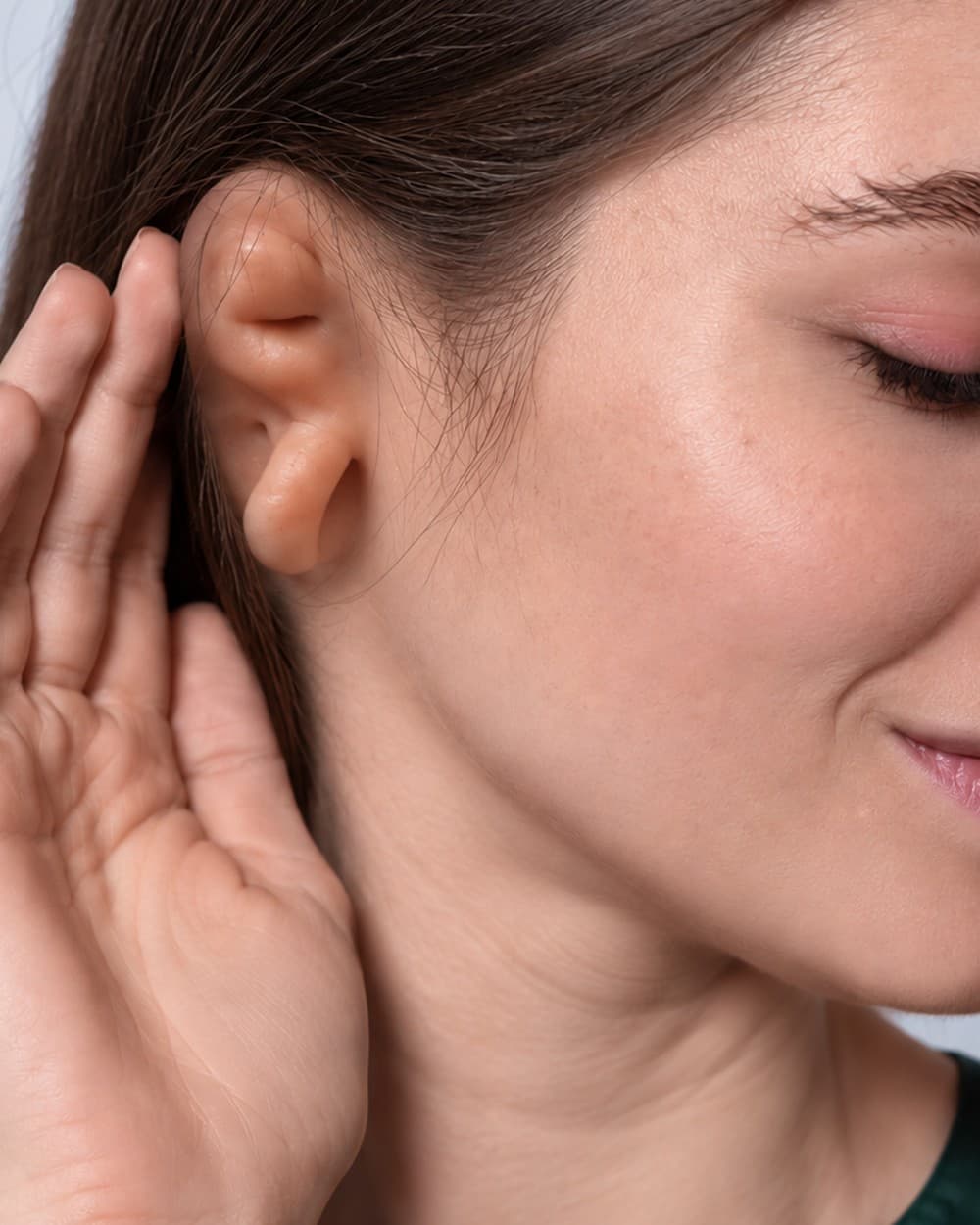
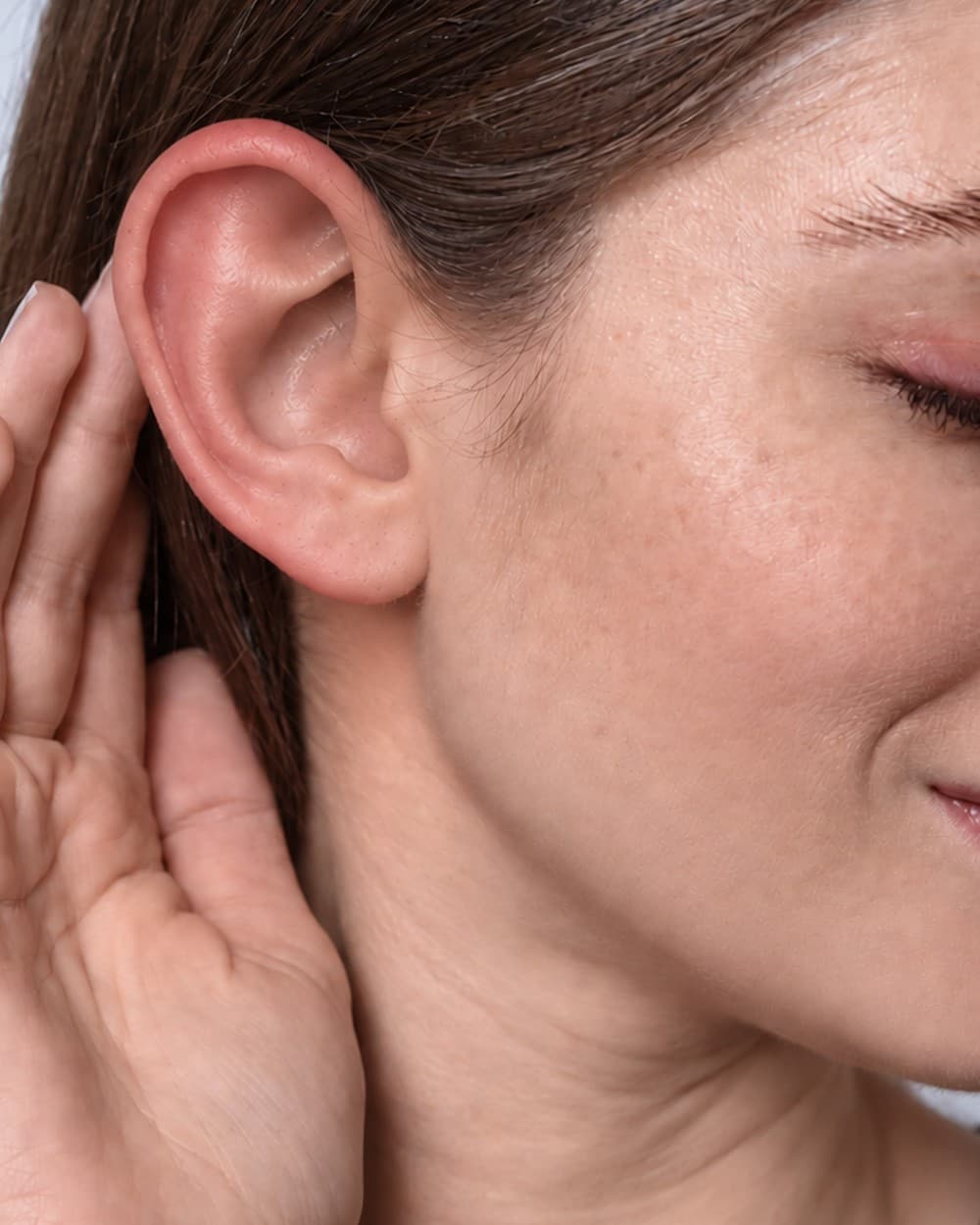
Microtia is the congenital under-development of the outer ear, which is small or incomplete; when the outer ear has not formed at all it is called anotia. Reconstruction aims to build a new outer ear on a framework carved by hand from the patient's own rib cartilage. In most patients treatment is done in two stages.
Stage 1 is performed under general anaesthesia and takes 4–6 hours: rib cartilage is taken through a small incision on the lower chest, the ear framework is carved and placed under the skin of the ear region; 1–2 nights are then spent in hospital. In stage 2, 6–12 months later (2–3 hours, usually 1 night), the ear is lifted away from the head and its back is covered with tissue from under the scalp and a thin skin graft, usually taken from the groin.
In children it is usually done from age 8–10, and in adults at any age if general health allows. The grade of microtia, the skin of the ear region and the chest are assessed at examination.
The most painful site is the chest, where the cartilage is taken; in the first days it is controlled with regular painkillers. The ear stays covered with a protective dressing for a week or two, and a protective cap is worn at night for the following few months. Most children are back at school within one to two weeks; contact sport is avoided for six weeks.
| Grade | Description |
|---|---|
| Grade I | The ear is smaller than the other side but recognisably an ear; the main folds are present, if faint |
| Grade II | Only the lower part of the ear, usually the lobe, has formed |
| Grade III | The most common form; a small remnant of cartilage and skin, and the ear canal is often closed |
| Grade IV (anotia) | Neither the outer ear nor the ear canal has formed |
| Rib cartilage | Synthetic framework (Medpor and similar) | |
|---|---|---|
| Material | The patient's own living cartilage | Ready-made porous polyethylene |
| Growth | Grows with the child | Fixed size |
| Exposure and infection | No risk of rejection or resorption | Comparatively higher risk |
| Timing | Usually age 8–10 | Can be done earlier |
| Donor site | A small incision on the chest | None |
| When | What to generally expect |
|---|---|
| Stage 1 | 1–2 nights in hospital, first dressing and check-up |
| Weeks 1–2 | Protective ear dressing; return to school or work |
| Week 6 | Return to contact sport with the surgeon's approval |
| Months 6–12 | Stage 2: the ear is lifted away from the head |
| After stage 2 | A week or two of dressings; a small refinement is planned if needed |
We recommend staying in Istanbul for 7–10 days for the first visit and 5–7 days for the second visit, 6–12 months later. Follow-up in between is done online with photographs.
Like any surgery, microtia reconstruction carries risks, and all of them are shared with you in writing before the operation:
Back to desk work: approx. 14 days. Social recovery: approx. 30 days. Depending on the scope of surgery you should plan for between 6 and 12 nights. The exact figure is confirmed in writing with your treatment plan.
The information on this page is general and does not replace medical advice. Timings and recovery vary between individuals; a definitive plan can only be made after examination.
Living cartilage is used, so in children it continues to develop in proportion with the body.
For reconstruction with rib cartilage, the suitable age for most children is 8–10. Only once the chest has reached a certain size is there enough cartilage for the ear framework. At this age the ear is also close to its adult size, so the reconstructed ear stays in proportion with the other side. In adults it can be done at any age if general health allows.
Rib cartilage is the patient's own living tissue: it is not rejected, it grows with the child and it lasts for life; in return it needs an incision on the chest, and surgery waits until the child is 8–10. Synthetic frameworks such as Medpor can be placed at a younger age and need no chest incision. Being foreign material, however, they carry risks of exposure and infection, in which case they may have to be removed. Which method suits the patient is discussed at examination.
With the rib cartilage technique, most patients need two stages. In the first, an ear framework is carved from rib cartilage and placed. In the second, 6–12 months later, the ear is lifted away from the head and its back is covered. Some patients need a small refinement to the earlobe or hairline; this is planned in advance.
No. The operation rebuilds the appearance and structure of the outer ear; hearing depends on the ear canal and the middle ear. If the canal is closed, hearing is assessed separately together with ENT specialists; a bone-anchored hearing device or, in selected patients, ear canal surgery may be considered. Outer ear reconstruction is usually done first.
The cartilage is taken through a small incision, leaving in place the membrane that allows cartilage to re-form. Breathing and physical development are not affected. There is chest pain in the first days, controlled with painkillers.
There is a low scar on the chest, incision scars behind the ear and a scar in the groin where the skin graft is taken. Scars are placed where they will show least, and where each will be is explained before the operation.
The fee is given according to the personal plan set after examination. The quote covers the operation, anaesthesia, hospital, medication, transfers and follow-up visits.
Bringing prominent ears closer to the head and recreating the natural antihelical fold.
Learn moreSurgical correction of congenital shape anomalies such as cryptotia, Stahl's ear and constricted ear.
Learn moreRepairing ear defects following injury, burns or tissue loss using grafts and local flaps.
Learn moreCorrecting asymmetry, recurrence or over-correction after previous ear surgery.
Learn moreShare your photographs and let us plan the right technique and timeline together.
Request a consultation