Brow Lift
Repositioning descended brows to open the eyes and restore a rested appearance to the upper face.
Learn moreFacial Rejuvenation Surgery
Repositioning the SMAS and deeper tissues as a single unit rather than tightening skin — the technique behind natural, durable facelift results.
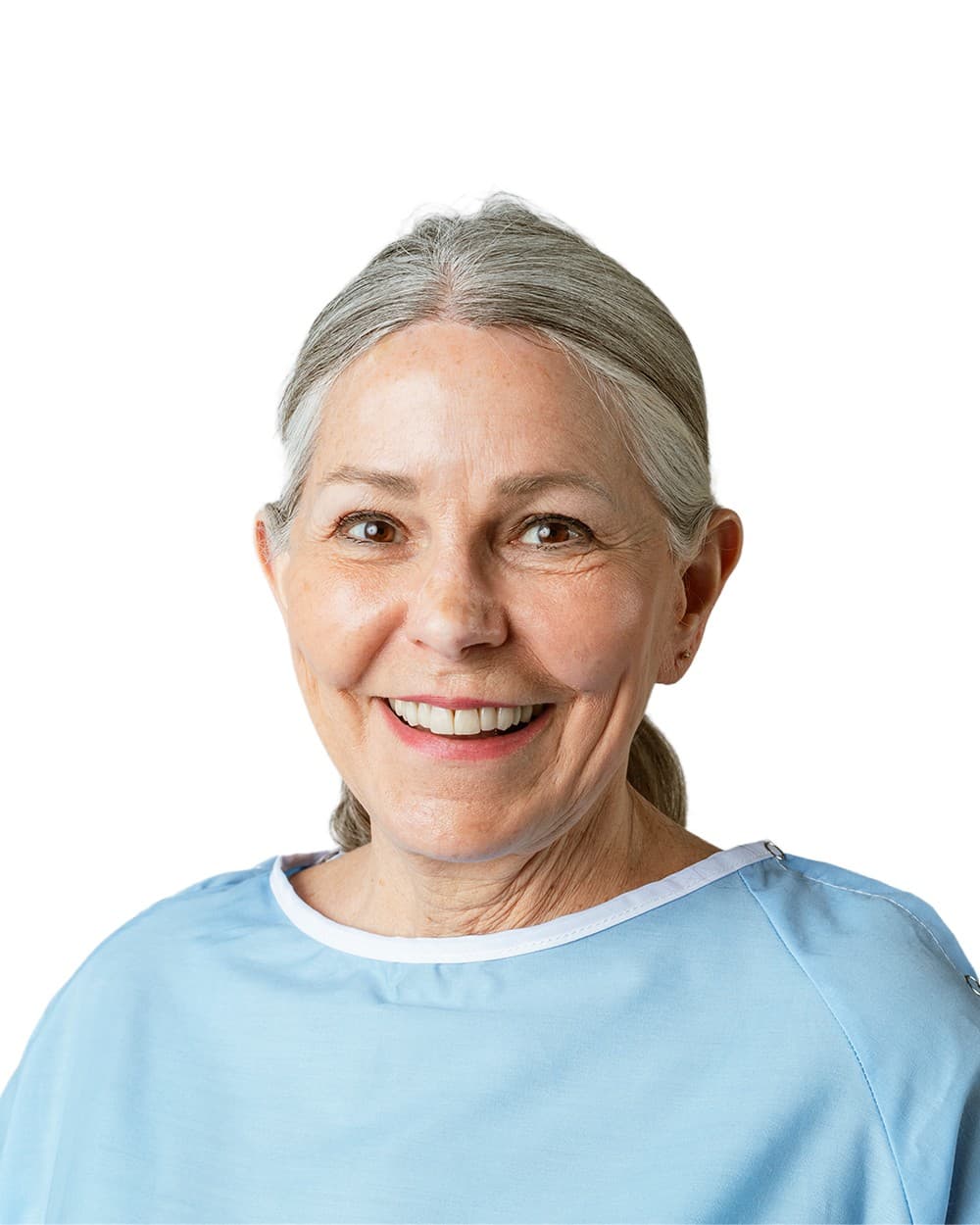

A deep plane facelift treats facial sagging not by pulling the skin tight but by releasing the musculo-fascial layer beneath it (SMAS) and the retaining ligaments that tether the face to the bone. The skin and the deep tissues beneath it are repositioned as one unit, against the direction in which they have descended with age. Because the tension is placed on the deep layer rather than the skin, a pulled look is not the aim.
The operation is performed under general anaesthesia and takes about 4–6 hours. The incision starts inside the hairline at the temple, follows the natural crease in front of the ear and continues behind it. The retaining ligaments are released and the midface tissues are moved vertically back to their anatomical position, working along the course of the facial nerve branches. Where appropriate, a neck lift, eyelid surgery, a brow lift or fat grafting can be planned in the same session. One night is spent in hospital after surgery.
Assessed in adults with sagging of the midface and cheek, a deepening nasolabial fold and loss of definition along the jawline, whose general health allows general anaesthesia. It can also be planned as a revision in patients who have had a previous facelift. The final decision is made at examination.
Swelling and bruising are most noticeable in the first week, when you sleep with your head raised. Return to desk work is usually possible in about the second week and to social life in about the third. Swelling can take 3–6 months to settle fully as the tissues find their final position.
| Traditional (skin / SMAS) facelift | Deep plane facelift | |
|---|---|---|
| Layer worked on | The skin or the surface of the SMAS | Beneath the SMAS; the retaining ligaments are released |
| Where the tension goes | Mainly the skin | The deep tissues |
| Areas it addresses | Mainly the jawline and neck | Midface (cheek), nasolabial area, jawline |
| Operating time | Shorter | Longer (about 4–6 hours) |
| When | What to generally expect |
|---|---|
| Day 1 | One night in hospital, dressing and check-up |
| Week 1 | Swelling and bruising at their most noticeable; sleep with the head raised |
| Days 7–10 | Stitches removed and pre-flight check-up |
| About week 2 | Return to desk work |
| About week 3 | Return to social life; most of the bruising has faded |
| Weeks 4–6 | Return to strenuous exercise, with the surgeon's approval |
| Months 3–6 | Swelling fully settles and the tissues find their final position |
We recommend staying in Istanbul for 10–14 nights. The flight home is usually planned for day 7–10, after the final check-up.
Like any surgery, a deep plane facelift carries risks, and all of them are shared with you in writing before the operation:
Back to desk work: approx. 14 days. Social recovery: approx. 21 days. Depending on the scope of surgery you should plan for between 6 and 12 nights. The exact figure is confirmed in writing with your treatment plan.
The information on this page is general and does not replace medical advice. Timings and recovery vary between individuals; a definitive plan can only be made after examination.
There is no set age. The decision depends on how far the tissues have descended, not on age.
Surgery does not stop ageing. How long the effect lasts varies from person to person, depending on tissue structure, skin quality, weight change and lifestyle.
The incisions are placed along the hairline and in the natural creases around the ear. Every surgical incision leaves a scar; these usually become less visible over time.
The surgery works along the course of the facial nerve branches, with the aim of preserving natural expression.
Yes. When the jawline and neck are assessed together, they are often planned in the same session.
In the first days there is a feeling of tightness and tenderness, which is controlled with prescribed pain relief.
Yes. A revision facelift is assessed separately; the technique of the previous operation and the condition of the tissues shape the plan.
Fillers replace lost volume; a thread lift raises tissue to a limited extent and for a limited time. Neither corrects the sagging muscle-fascia layer beneath the skin or the ligaments that support the face. Where the face and neck have clearly sagged, that is what a surgical facelift does. For mild changes non-surgical treatments may be enough; which suits you is decided at examination.
The fee is given according to the personal plan set after examination. The quote covers the operation, anaesthesia, hospital, medication, transfers and follow-up visits.
Repositioning descended brows to open the eyes and restore a rested appearance to the upper face.
Learn moreA more limited procedure lifting the outer brow through a short incision in the temporal hairline.
Learn moreRemoving excess upper eyelid skin to widen the visual field and open the gaze.
Learn moreCorrecting under-eye bags and the tear trough hollow to resolve a persistently tired expression.
Learn moreShare your photographs and let us plan the right technique and timeline together.
Request a consultation