Closed Rhinoplasty
All incisions placed inside the nose, leaving no external scar and allowing swelling to settle more quickly.
Learn moreRhinoplasty
Lowering the nasal dorsum by preserving your own anatomy rather than removing and rebuilding it.
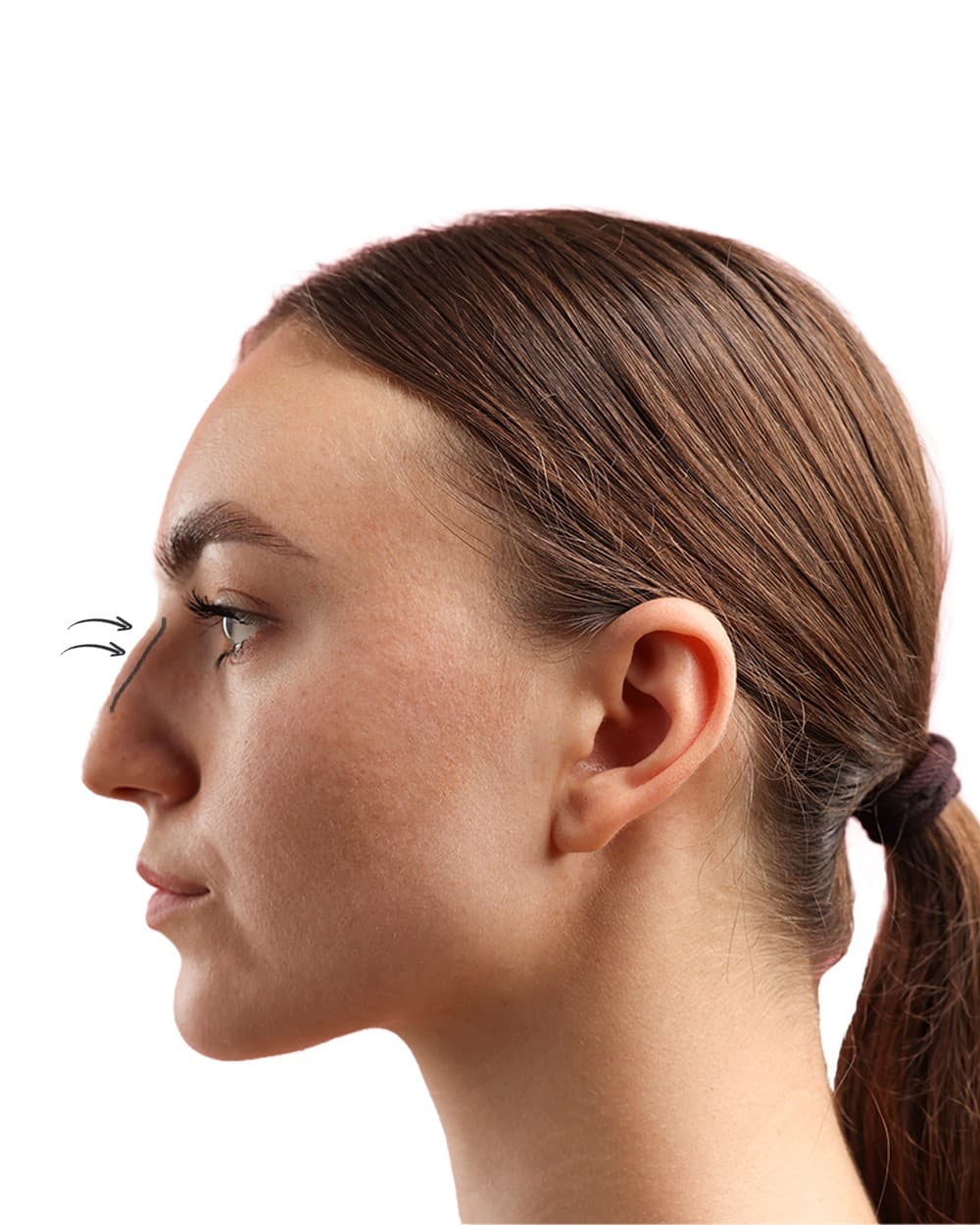
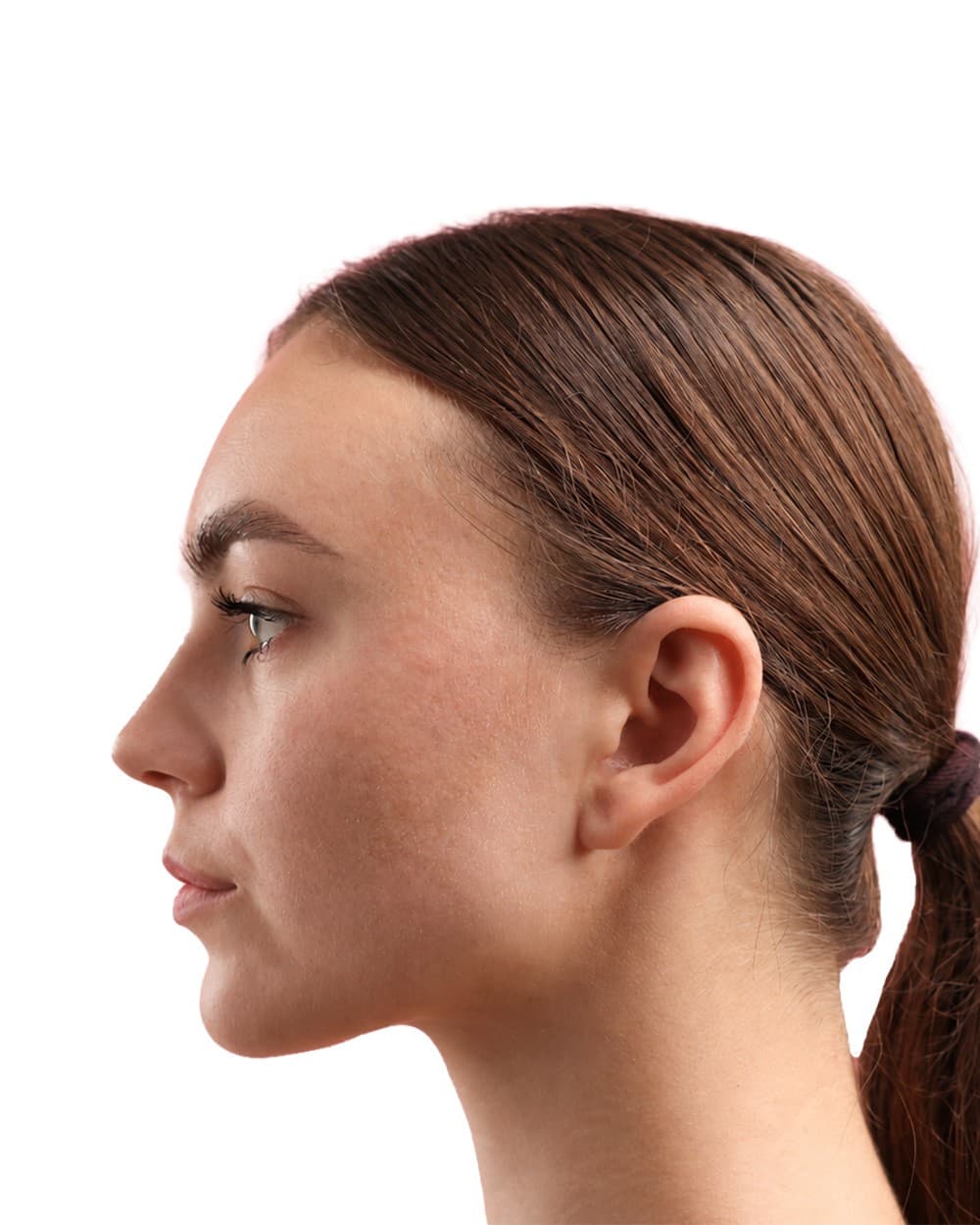
Preservation rhinoplasty reduces a dorsal hump not by cutting away and rebuilding the bony and cartilaginous roof of the nasal bridge, but by keeping that structure intact and lowering it as a whole. The hump is brought down by a controlled reduction of the supporting tissue beneath the bridge, with the aim of preserving the nose's natural dorsal line and inner structure.
The operation is performed under general anaesthesia and takes about 2.5–3.5 hours. A thin strip is removed from the cartilage and bone support beneath the bridge, and the bridge is lowered as a single unit without opening its roof. Where needed, the tip is reshaped in the same operation and a deviated septum is corrected. In suitable patients it can be combined with the closed approach. One night is spent in hospital after surgery.
Assessed in patients with a dorsal hump and an otherwise straight, regular bridge who have not had nose surgery before (primary cases), when keeping the nose's natural dorsal line is the goal. Which technique suits you is decided at examination.
A nasal splint is worn for the first week, and there may be swelling and bruising under the eyes. The splint comes off around day 7, when desk work can resume; social life is usually possible from about the second week. The fine swelling of the tip can take 6–12 months to resolve fully as the final shape settles.
Which technique suits you is decided at examination.
| Traditional (structural) rhinoplasty | Preservation rhinoplasty | |
|---|---|---|
| Hump removal | The hump is cut away and the bridge rebuilt | The bridge is kept and lowered from beneath |
| Roof of the bridge | Opened and reshaped | Kept intact |
| Suits | A wide range of noses, revisions | A straight bridge with a hump, first operation |
| When | What to generally expect |
|---|---|
| Day 1 | One night in hospital |
| Week 1 | Nasal splint and, if used, internal silicone splints; swelling and bruising under the eyes |
| Around day 7 | Splint removed and check-up; return to desk work |
| About week 2 | Return to social life |
| Weeks 4–6 | Return to strenuous exercise with the surgeon's approval; glasses as the surgeon advises |
| Months 6–12 | Swelling of the tip largely resolves and the final shape settles |
We recommend staying in Istanbul for 7–9 nights. The flight home is usually planned for day 7–10, after the splint has been removed and you have been checked.
Like any surgery, preservation rhinoplasty carries risks, and all of them are shared with you in writing before the operation:
Back to desk work: approx. 7 days. Social recovery: approx. 14 days. Depending on the scope of surgery you should plan for between 6 and 12 nights. The exact figure is confirmed in writing with your treatment plan.
The information on this page is general and does not replace medical advice. Timings and recovery vary between individuals; a definitive plan can only be made after examination.
In the traditional technique the hump is cut away and the bridge is rebuilt; in the preservation technique the bridge's own roof is kept and lowered from beneath.
The inner structure of the nose and the airway are preserved, and a deviated septum is corrected in the same operation. The aim is to preserve or improve breathing.
A partial return of the hump is a known risk of the preservation technique. Careful patient selection and surgical planning aim to reduce it.
With the closed approach the incisions are inside the nose and not visible. With the open approach the small incision on the columella usually fades over time.
Visible swelling eases over the first weeks; the fine swelling of the tip can take 6–12 months to resolve fully.
In the first weeks glasses may be restricted so they do not press on the bridge; your surgeon will tell you for how long.
Yes. Where needed, the tip is reshaped in the same operation.
The fee is given according to the personal plan set after examination. The quote covers the operation, anaesthesia, hospital, medication, transfers and follow-up visits.
All incisions placed inside the nose, leaving no external scar and allowing swelling to settle more quickly.
Learn moreCombining the scarless closed approach with the preserved natural dorsal line of preservation rhinoplasty.
Learn moreFirst-time nasal surgery in patients who have not previously had a rhinoplasty.
Learn moreCorrecting aesthetic or functional problems remaining after previous nasal surgery, usually with cartilage graft support.
Learn moreShare your photographs and let us plan the right technique and timeline together.
Request a consultation